Showing posts with label mtg. Show all posts

Friday, July 11, 2025

The Peculiar Case of the Arachnid in Magic


Magic: the Gathering plays host to tropes and concepts belonging to so many niches of fandom. This spans from pop culture references and homages of media from generations past, to the coopting of entire fandoms through Universes Beyond, and to the long-past era of Magic's flavor text borrowing the words of the great writers of the past. If we treat Magic like a big-tent concept, there is something for everyone under its canopy, even if some can only live on in the flavor text printed on cards that came before the established worlds of Dominia took shape, before the idea of a multiverse of independent settings could be unified by connections between them and tropes could be lent to one another. I get lost in the prose of Shakespeare at least once a month while sifting through my older cards, prompting me to pull a modern translation off my bookshelf to dig into the context of these immortal quotes. I play and collect Magic for these moments where the boundaries of my hobbyism bleeds past the cards, where connections to a grander concept take shape in the identity I've established through my passions.
Scryfall search for references and quotations to Shakespeare on Magic cards

Enter Macbeth, Seyton, and Soldiers, with Drum and Colors


MACBETH
Hang out our banners on the outward walls.
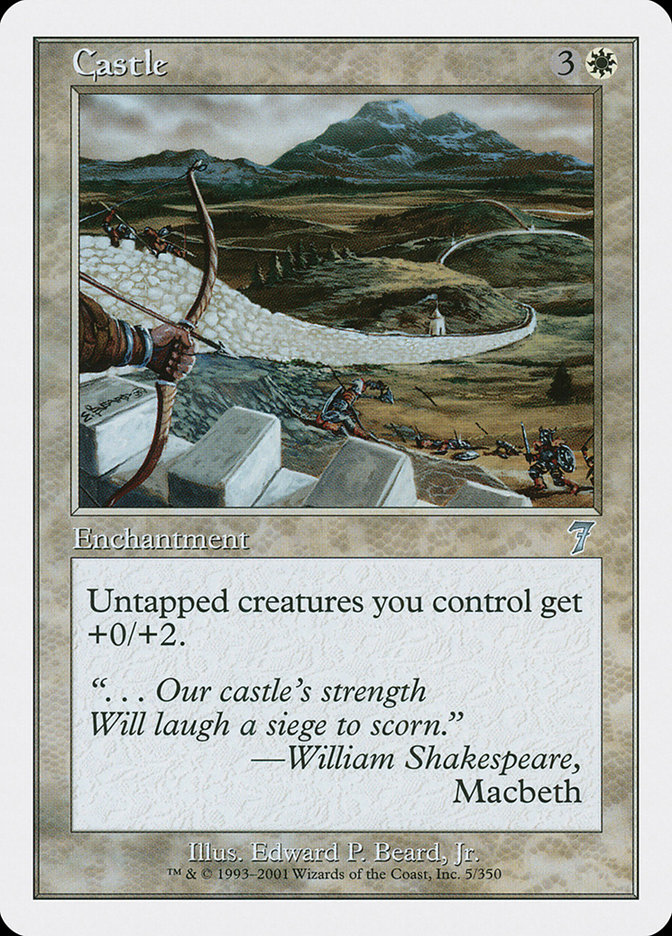
The cry is still “They come!” Our castle’s strength
Will laugh a siege to scorn. Here let them lie
Till famine and the ague eat them up.
Were they not forced with those that should be
ours,
We might have met them dareful, beard to beard,
And beat them backward home.
A cry within of women.
                                                      What is that noise?
SEYTON
It is the cry of women, my good lord.
He exits.
MACBETH
I have almost forgot the taste of fears.
The time has been my senses would have cooled
To hear a night-shriek, and my fell of hair
Would at a dismal treatise rouse and stir
As life were in ’t. I have supped full with horrors.
Direness, familiar to my slaughterous thoughts,
Cannot once start me.

There is more to a Magic card than the rules text that define it, the art that portrays it, the flavor that expounds it, or the lore that emboldens it. Castle is more than an enchantment that empowers the creatures you've chosen to hold back in the defensive. It's a representation of the physical presence of that defense, which Macbeth is all too aware of as the army of Malcolm lays in waiting in the Birnam Wood, ready to siege. Macbeth is confident in his force's strength but knows that no defense is safe from the probing terrors that infest our minds. Is this cry a foretelling of what's to come? Why does Malcom hide in the woods instead of begin his assault? The cry is that of a dying Lady Macbeth, and Malcolm does approach under the cover of the wood and leaves in disguise.

Enter Seyton.

                                        Wherefore was that cry?
SEYTON
The Queen, my lord, is dead.
MACBETH
She should have died hereafter.
There would have been a time for such a word.
Tomorrow and tomorrow and tomorrow
Creeps in this petty pace from day to day
To the last syllable of recorded time,
And all our yesterdays have lighted fools
The way to dusty death. Out, out, brief candle!
Life’s but a walking shadow, a poor player
That struts and frets his hour upon the stage
And then is heard no more. It is a tale
Told by an idiot, full of sound and fury,
Signifying nothing.
Macbeth was a fallible man, corrupted by desire and divine prospect. But he understood all too well that the strong defense of his castle can only protect from the externally known threats. The terrors of the mind will attack on a different angle, just as a disguise can supplant the best defensive. Castle is only a good defense if your opponent chooses to fight on your terms.

Magic can tell fantastic stories through the lore and use of flavor or personal stories through players in their competitive journeys. I live for these stories and the many shapes they come in. Of the many it can tell, I am most fond of how it interfaces with taxonomy, the field of study by which we categorize all of life into digestible units. Taxonomy can be a heated and contentious field at times that I've had the pleasure to study and contribute to for more than a decade. I've witnessed outbursts during presentations from rival scientist, so overtaken in their vehement disagreement that the decorum of the setting vanishes. Snarky remarks are inserted into the questions after a presentation as others opine, vying for the final word on a subject matter. I've had my share of whispered complaints, never so brazen to outlandishly attack another scientist over their work. Complaints about the use of certain calibrations in fossil data. At the exclusion of a certain species that would change the entire narrative of a study. Taxonomy ultimately boils down to telling a narrative about the tree of life in order to make sense of the endless eccentricities we find among the many branches of the tree.


Kunstformen der Natur (1904), plate 66: Arachnid

There's a question of taxonomy I've been heavily invested in: what is an arachnid to the many scientists among Dominia? In our realm, arachnids include the many 8-legged animals like the well-known spiders and scorpions, the parasitic and peculiar mites and ticks, the common garden predator harvestmen or "daddy long legs", and so many others with different forms and dubious relations to one another. They're an old lineage of animals that have undergone major changes to their forms and the genetics that define those forms, making them a hard group to unite under a common set of characteristics without carving out many exceptions. But what opinions do the Thran have on arachnids?
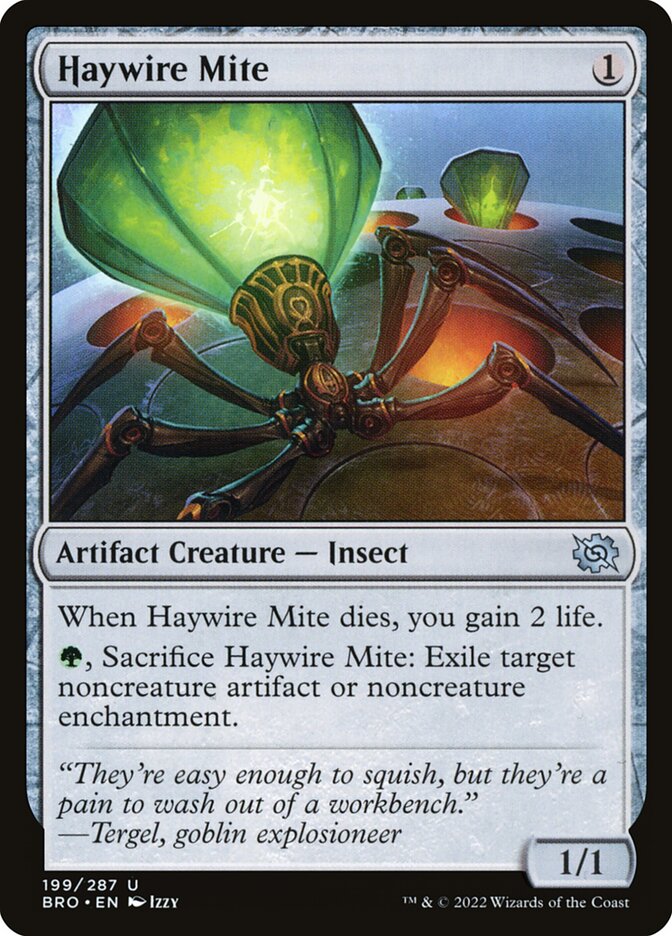

This question started to nag at me because of one of my favorite toolkit cards I have played in the modern format, Haywire Mite. It's a modest 1-drop. Fetchable with Urza's Saga, a notable removal spell for obnoxiously hard to disrupt The One Ring. It even gains you a bit of life when it dies. All these characteristics make it a very palatable card that remained in the mainboard or sideboard of my modern deck until the winds shifted and a new card took its place. But every time I cast this card I had to wince. What was this creature? By name, this artificer's creation was an arachnid. The depiction supported the classification of an arachnid by our standards, but oddly not as a mite. The creation seems to have been modeled after a spider, with the distinct prosoma and opisthosoma, or the body regions that define the body plan of the spiders. Mites are at odds with this body plan. The ever-churning engine of genetic change and environmental pressures have formed the mites of our world in a sleek body plan, where the prosoma and opisthosoma are mushed together in a tightly packed casing, better suited for riding around on the bodies of hosts. In all, I agree with the distinction that this is an arachnid by design inspiration, but the creature type disagrees! Insects shared a lot in common with the arachnids, but are just a distant cousin to one another in the tree of life. They share many of the evolutionary innovations inherited from their common ancestors like the sturdy yet flexible exoskeleton comprised of the protein polymer chitin. Or that they share a basic body plan of smaller regions repeated one after another called segmentation, where the same limbs and structures were repeated over and over and could be modified from one another to form a wild diversity of appendages and structures like the mandibles, wings, stingers, or silk-spitting spinnerets. The Thran artificer in this case was sorely wrong on their classification. There's conflict in name, art, and type, and for that matter we can extend that conflict to its abilities. A mite by virtue will represent a parasite, which is conveyed somewhat by latching onto a host and bringing back life to you when it dies. Outright removing its host from existence is antithesis to the parasitic relationship. Haywire Spider would have been a much more fitting unification of form, theme, and function. The Thran maybe can be forgiven here for their oversights, as science and taxonomy assuredly progressed a lot over the thousands of years leading up to contemporary Magic lore.

The creature types that represent the arthropods, or the greater phylum that encompasses the crustaceans, arachnids, insects, millipedes, centipedes, and many other varied groupings of different inclusions and sizes, are represented only by a handful of creature types through Magic's history. Spiders, Scorpions, Mites, Insect, Crabs, Lobsters, and the humanoid lobster Homarids have been used to categorize all representatives of the arthropods with suspect placements of a considerable chunk of these creatures.

Creatures of each arthropod-related type released per year

Percentage of creatures that are each arthropod-related type released per year

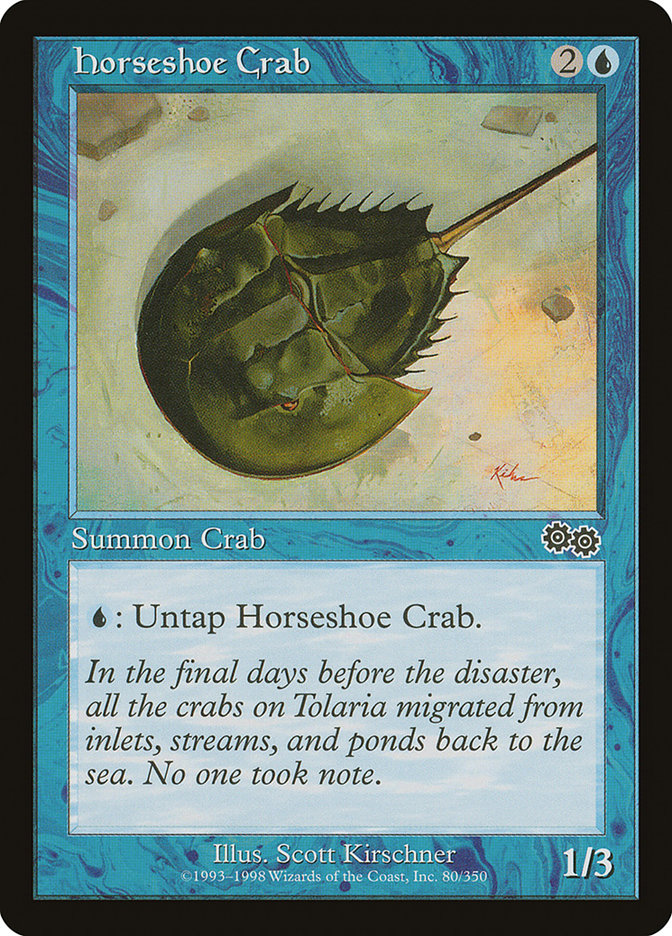
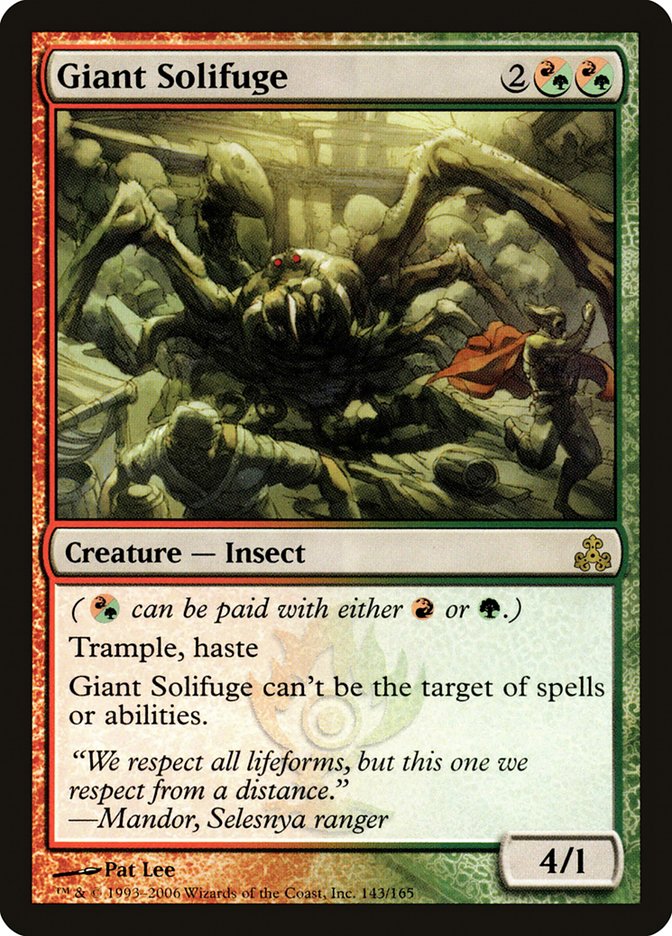
Over time this representation has increased with the proliferation of more creature cards being printed than ever before. They seem to have kept apace with this overall increase as scientists of Dominia are still identifying new bugs and humanoids like the Homarids and various insectoids like the Kraul and Nantuko are still around. These representations have come at the expense of our real-world understanding of them. Haywire Mite is merely a mite by name and a spider by morphology, but neither by type. Horseshoe Crabs have been mistaken many a time for being an actual crab, but the similarities end at the presence of a shelled carapace that vaguely looks alike. They're an enigmatic lineage, popular in recent genetic studies for the difficulty we have in supporting what we know of their morphological relatedness with what we know of their genetic relatedness to other arthropods, but ultimately they are more closely related to a spider than to an actual crab. The same can be said for the Giant Solifuge. The Izzet and Simic scientists of Ravnica were well within their rights to describe them as insects. After all, Mandor of the Selesnya said it best that some creatures should be respected from a distance. That distance may have just been too far to notice some of the arachnid hallmarks we figured out only under the microscope, and it's hard to care about how many legs something has when it's charging you down and everything you throw at it misses.

As Magic continues to expand the boundaries of the lore and branches out into more Universes Beyond settings, my excitement about the pedantry of creature types will likely diminish. I can only be so excited about the anatomical accuracy of the depictions on cards for so many settings, and debating the merits of a human spider is much harder than a spider on its own.

The nature of type lines in magic has always been wishy washy. There was a simpler time when the game could afford as unique a card as a "Summon Bees" and not need to worry about how that would interact with cards buffing insects. For the sake of the game, the biological retcons are a necessity to facilitate the continual growth of a cohesive ruleset that encompasses more than 30,000 unique cards. My only hope is that as type lines evolve with the game, and more creatures are discovered representing the broadness of our tree of life, we don't label a spider as an insect and then call it a mite.

Thursday, September 21, 2023

Turbo Fungus Teardown

There were a few hiccups and growing pains along the way, but I love the spot where my Ghave, Guru of Spores deck lives in my local meta. He doesn't win an excessive share of games, floating around the 25-30% mark, but I really enjoy the engaging lines of play that come out of it. What got me to this spot were a few decisions that set my deck apart from other Ghave decks.

1) The Counter Suite

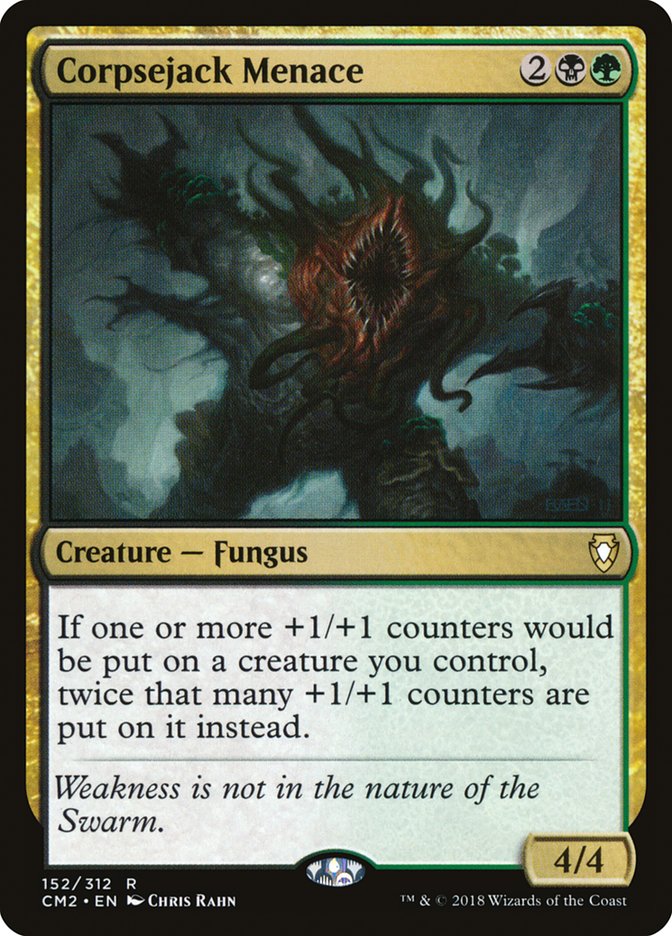
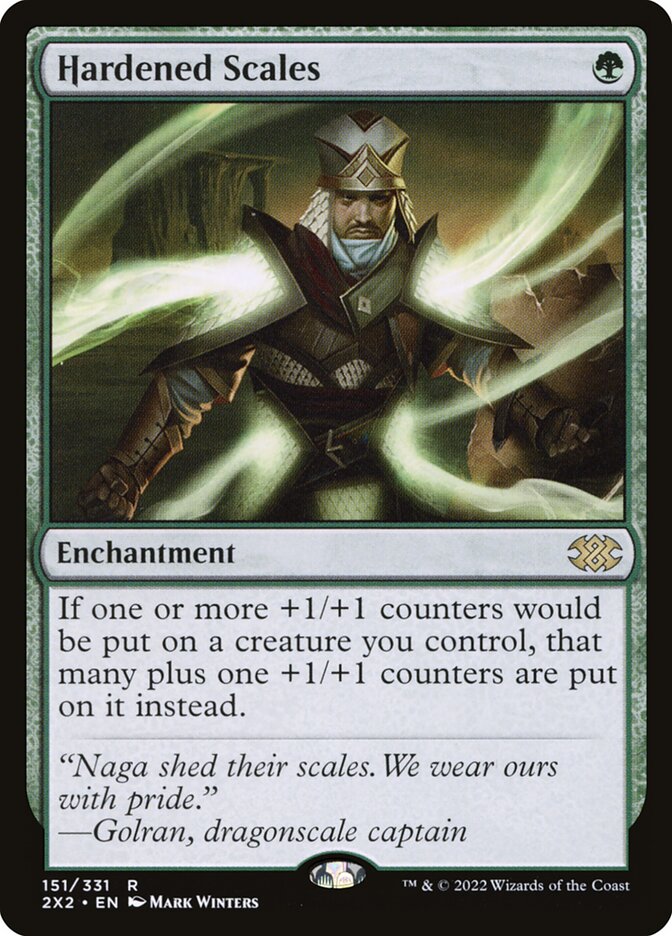
When it comes to a +1/+1 counter theme, big flashy cards like Doubling Season, Corpsejack Menace, and Branching Evolution stand out as terrifying stalwarts if you can enable their lines of play. None of these cards currently make the cut in Ghave despite the big effect they can have on a boardstate. Instead of relying on these players, I elected to only use their simpler alternatives like Hardened Scales and Ozolith, the Shattered Spire. Since Ghave only ever places 1 counter per activation, doubling the number of tokens only becomes relevant after stacking multiple sources. Casting Ghave with a Branching Evolution on the board alone nets four extra +1/+1 counters for two extra mana over Hardened Scales. This may be a difference maker between getting an extra big damage swing for Ghave commander damage, but the downstream tradeoff between these two cards is negligible and my early plays had two extra mana to play with. Playing both of these likely would be better yet, but finding the room for a seventh source of extra counters that provides no value alone is tricky. The upside to the Hardened Scales-esque cards are their bonus utility: Kami of Whispered Hopes is turbo charged mana dork, Ozolith, the Shattered Spire can tap to place counters, and Conclave Mentor has saved me in multiple games with the lifegain off of removing it.

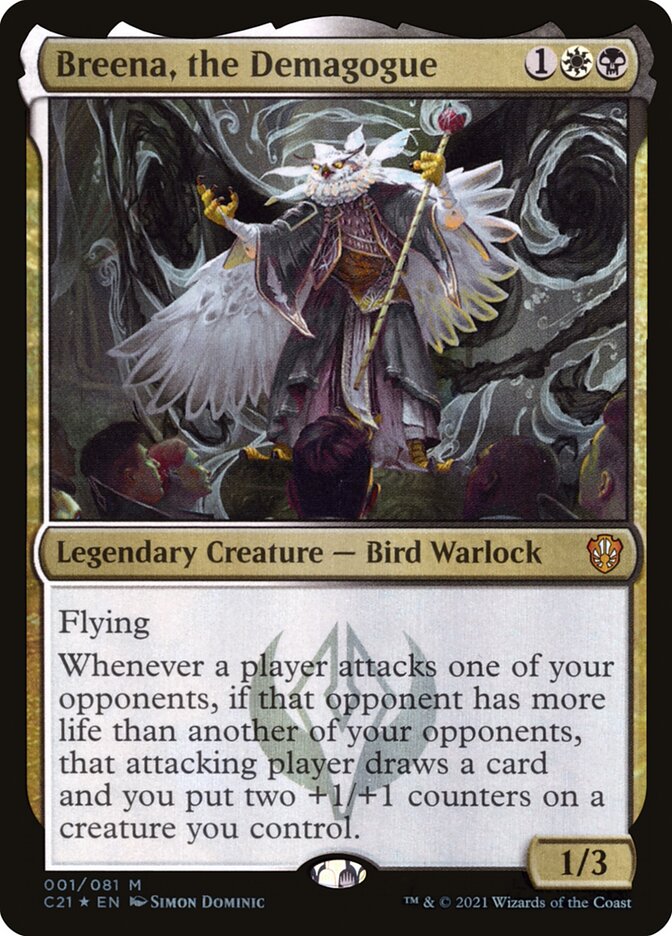
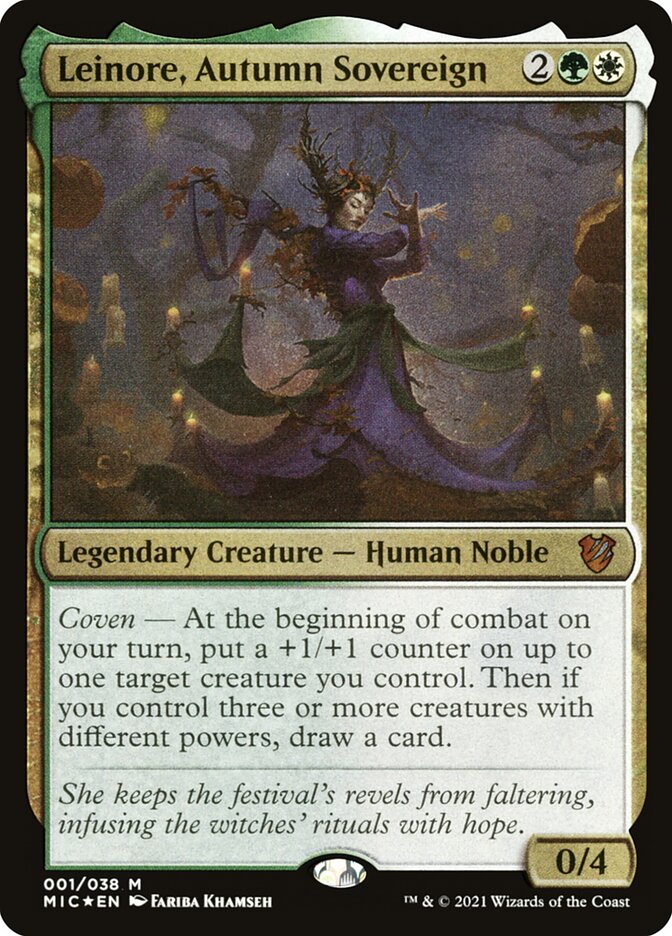
A lot of the counters theme is taken up by cards that generate immediate two-card synergies with Ghave. These include cards that produce counters on creature ETBs, like Good-Fortune Unicorn and Renata, Called to the Hunt and combos that can generate card draw like Breena, the Demagogue or Leinore, Autumn Sovereign. Getting counters without using Ghave's sacrifice ability means I can flood the board very effectively with saprolings, and set up for bigger future turns with lots of bodies to either pump or to use as sacrifice fodder.

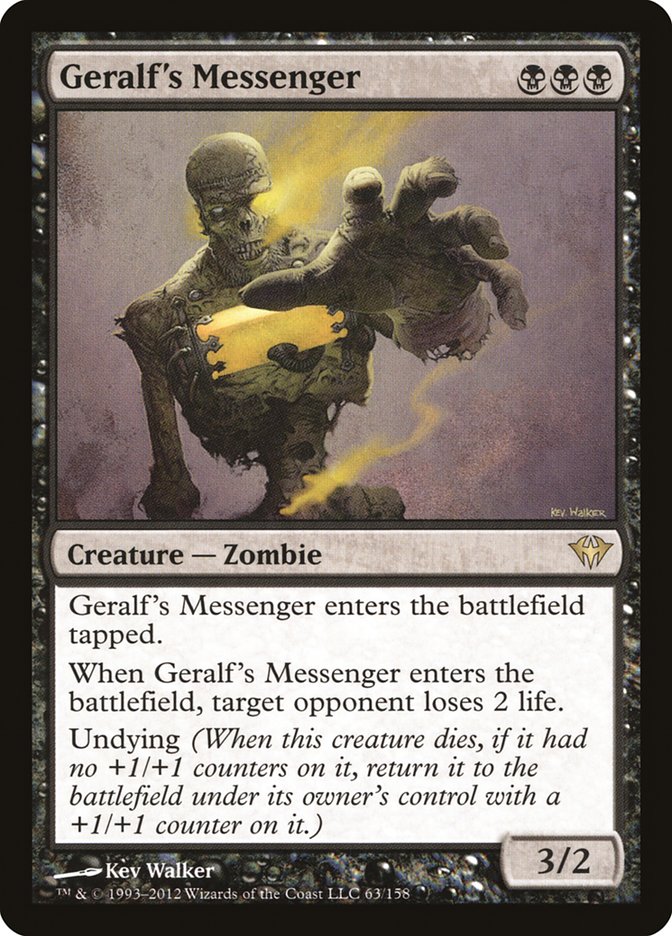
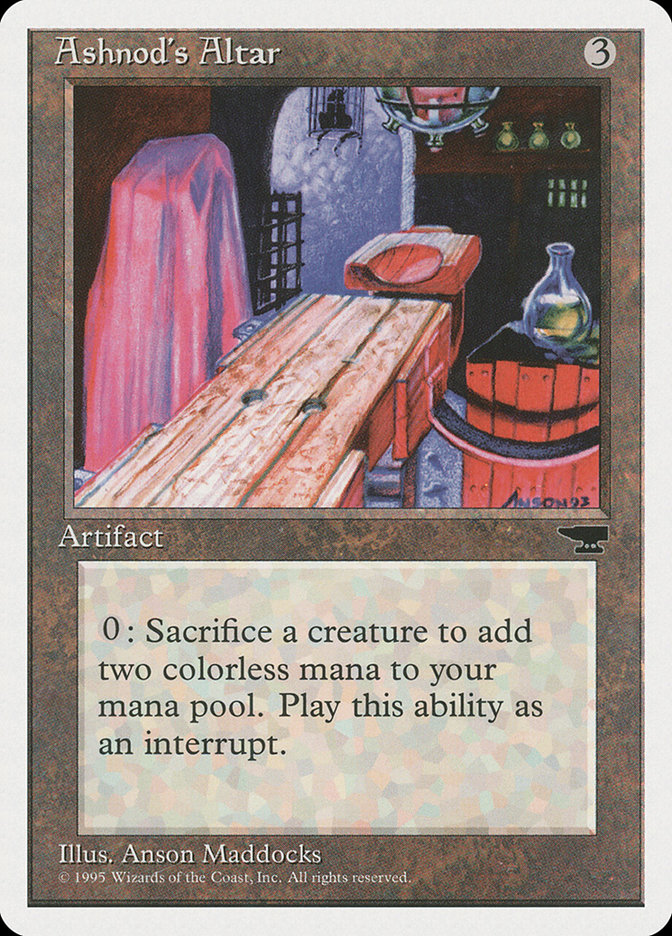
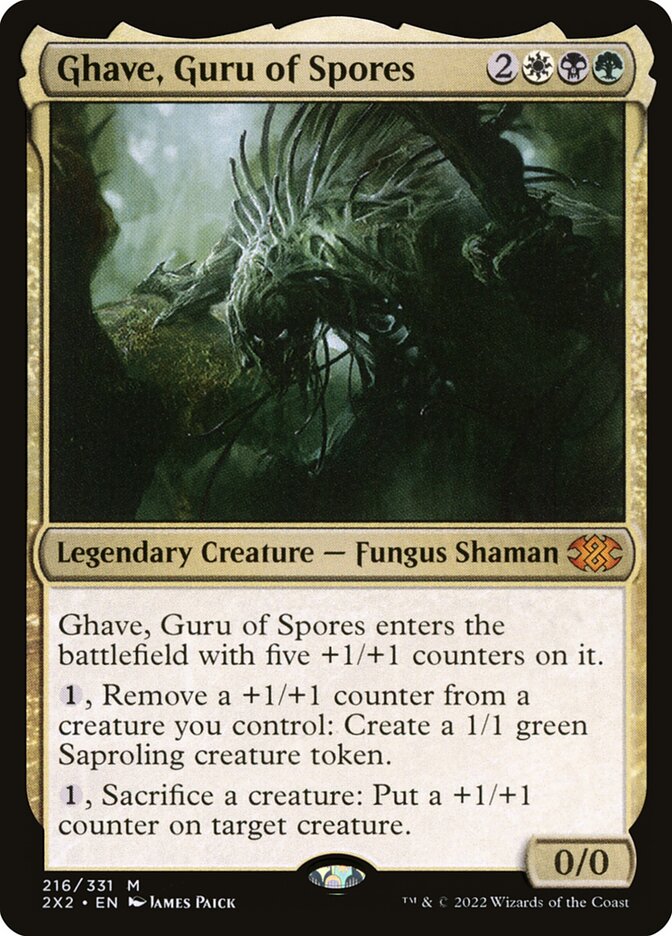
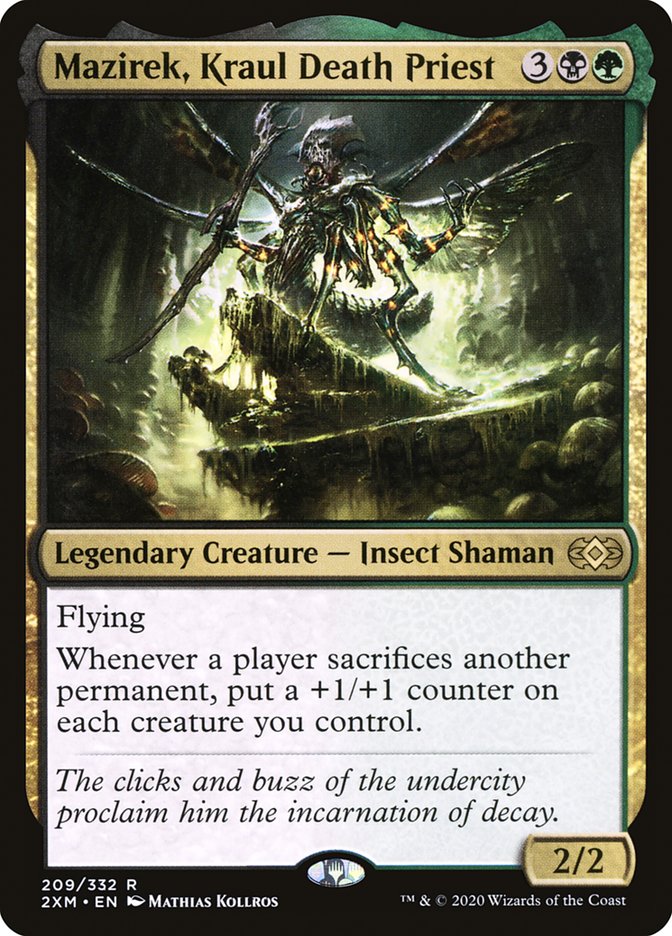
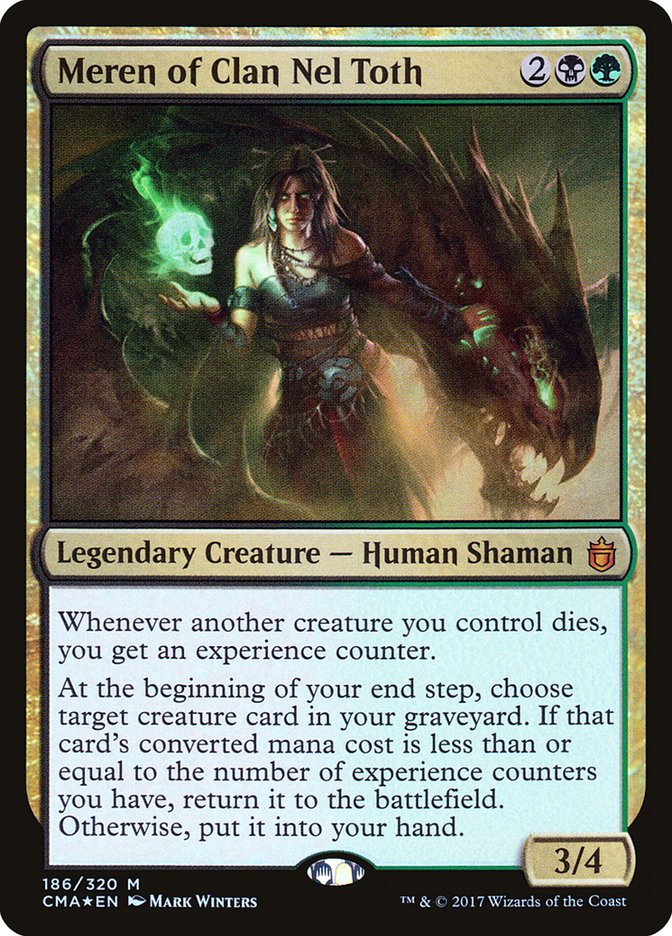
Geralf's Messenger sits in a weird spot in the deck. Undying sometimes can be a non-bo with the amount of counter generation, but getting a board state with just Ghave, Geralf's Messenger, and either mana Altar results in an infinite drain combo. He was a late addition into the deck after a heavy transition into both Undying and Persist, and is the only one to survive those themes being broken off into Mazirek, Kraul Death Priest / Meren of Clan Nel Toth persist combo.

2) The token suite

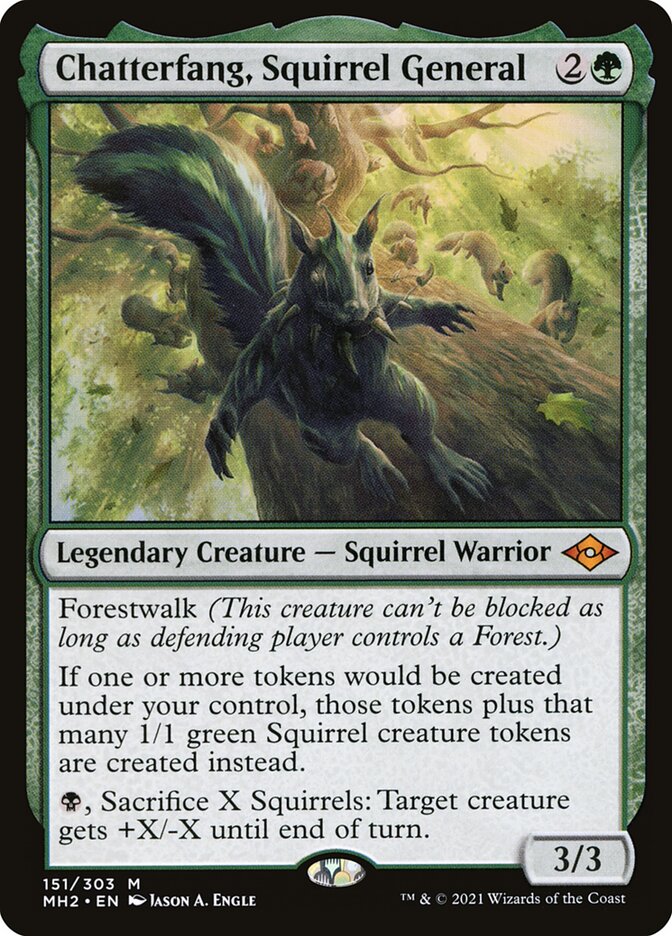
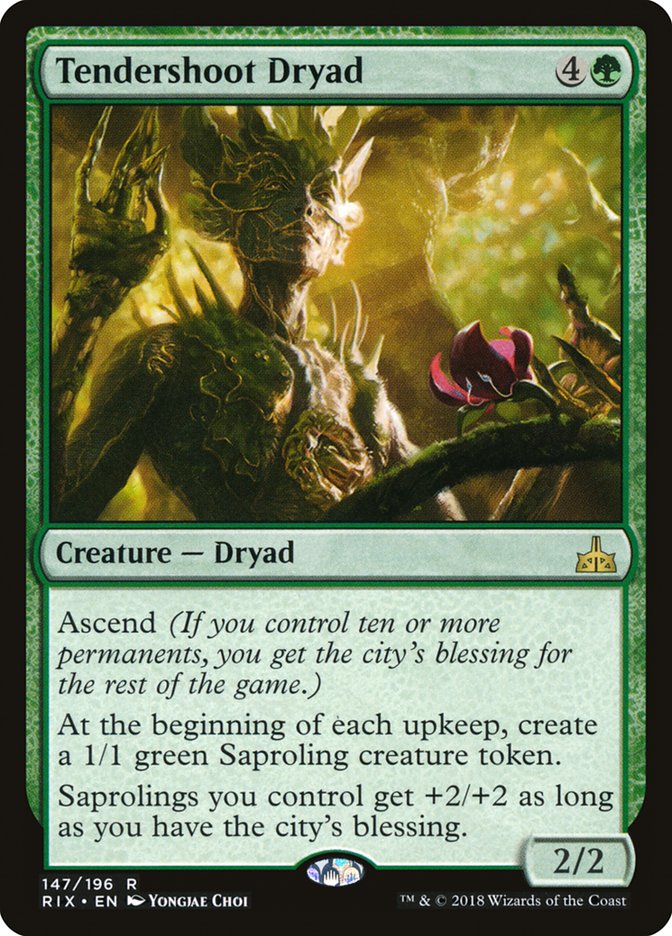
This portion of the deck has been the most volatile since moving the deck away from fungus tribal and into generic Ghave combo territory. In my ideal lines of play, I aim to win before Ghave comes down onto the battlefield, or I aim to set up as much value and board presence as possible to eek out more value from Ghave activations. Chatterfang, Squirrel General has synergies with every other token producer to get an additional body on the field, which mostly works as a redundancy to Mondrak, Glory Dominus. One of these two (likely Mondrak due to his prohibitive 2WW cost) will eventually be switched for the flashing Doubling Season, which then doubles up for both the counter and the token themes. Tendershoot Dryad is a glorious removal magnet. If it can last an entire turn cycle, the four additional bodies end up being quite impactful as either sacrifice fodder or bodies, and likely will be 3/3 at bare minimum thanks to the city's blessing.

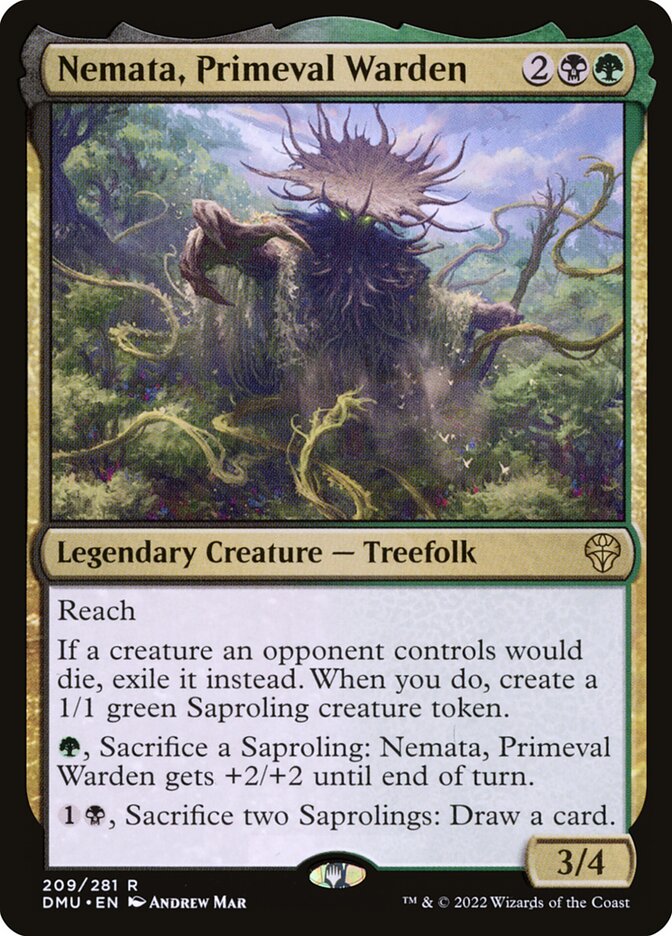
The most important piece in this theme is a true hoser to any graveyard strategies. Nemata, Primeval Warden has caused so many groans over my tenure with this deck. Not only do I get value for each creature dying, but I get to shut down so many different creature recursion lines. Drawing into Nemata has the biggest win percentage boost in the entire deck.

3) The Utility Suite

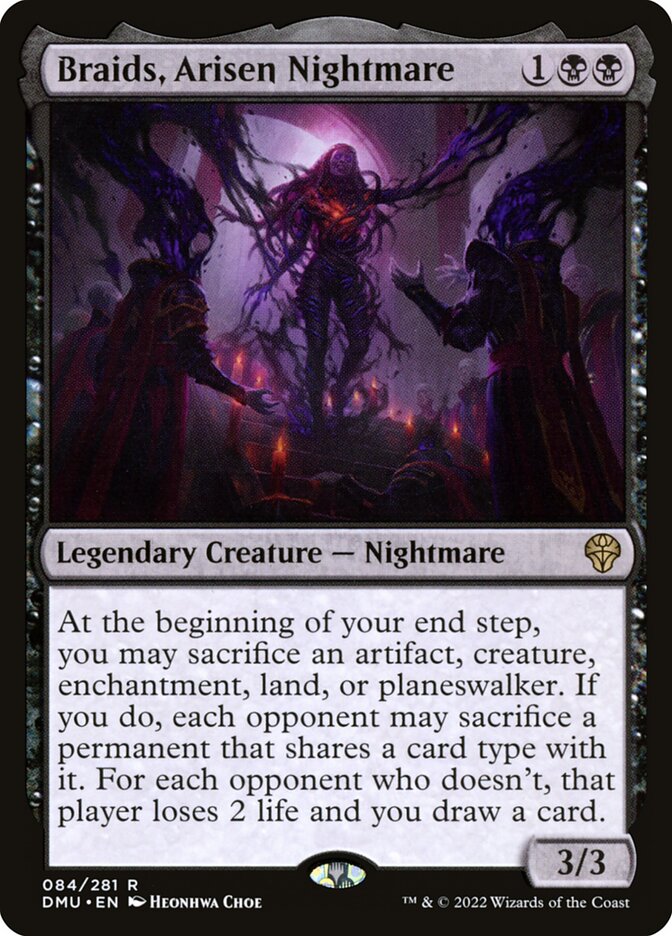
The utility portion of the deck fits into a few generic themes - card draw, removal, mana ramp, recursion. My approach to these themes is to use pseudo-commanders. These are creatures that can stand up on their own and act out the majority of my goals when Ghave either can't make it onto the battlefield or if he gets hated on too aggressively. Some of these have already been covered, such as the card drawers and counter generators Breena and Leinore, or the token generators Tendershoot Dryad and Nemata, but my favorite include in the deck is Braids, Arisen Nightmare. The little sister of the deservedly banned Braids, Cabal Minion, this Braids works by taxing the rest of the table of permanents they may not be willing to sacrifice but that I may have an ample supply of. The sacrifice is optional, so this utility works well in a pinch if I need to guarantee a draw-three by sacrificing a land that no one wants to match. Braids alongside any stream of tokens ends up being a great value generator when compared to other taxing draw effects in the deck like Esper Sentinel. Paying the mana often times feels easier than sacrificing a much needed blocker or your commander on a slim board, so the draws are always plentiful.


Monday, July 24, 2023

 In Magic the Gathering, there are a couple of player personas to describe who you are and how you interface with the game. Timmys like big spells and big creatures with massive splashy effects. Johnnys like the forgotten cards and winning in their special way. Spikes have a much simple goal – winning at all costs. I fit in closest with Johnny. I love my occasional big, splashy play and I also try to run efficient value engines that outpace opponents or finish games on the spot, but my heart lies in showing off old, eccentric cards I’ve inherited into my collection or with evocative art in the older styles of the game.

I interface with Magic through EDH. I love the story that manifests each time I sit down to play and am always on the hunt for the perfect pod of four commanders that will give me a rush when they enter the battlefield and begin influencing the game. The ever-growing pool of cards and potential commanders refreshingly allows me to explore so many options and alterations to my decks in between each round I sit down to play. I am in love with the open-ended nature to the format. If I primarily play at one spot with a consistent group of people, the next spot over may have a vastly different meta where my deck doesn’t work the same way. Exploring those intricacies or community meta and finding the solutions to both across a range of power levels is an endlessly crunchy puzzle to solve between every game I shuffle up.


For instance, my first commander was Ghave, the Guru of Spores. An amalgamation of weird bone-like protrusions and dangling vines, I knew instantly I wanted to tell a story by amassing an army of fungi to overwhelm my opponents. My first iteration of the deck – the milquetoast named Abzan Saprolings – splashed into the game immediately when I sat down and introduced myself as a long time fan first time player. I quickly played Ghave and began amassing fungus after fungus before winning the game with an infinite combo where I sacrificed creatures to produce mana and make more creatures to sacrifice. Stumbling through that combo, which I later would discover was only one of hundreds of pairings that Ghave could stumble into, gave me such a rush and I was hooked.

The next time I played was at a different store with different people, and I got trounced by decks that outclassed my meager pile of fungus. I used Ghave in ways people didn’t expect by gleaming empowering growths onto other player’s creatures to dwindle the board down to only the creatures I wanted to deal with, but my fungi weren’t strong enough that day to eat through everything. That session was the ignition that would start an obsessive process of deck building and design where I would power up my deck, win oppressively, then immediately try to power it back down to start the cycle anew. This cycle went on for a couple of months, during which I discovered a new subtheme in the fungus deck called undying, which eventually would break out and transform into a persist theme in a deck commanded by Mazirek, Kraul Death Priest and then later Meren of Clan Nel Toth. This branching point pushed my Ghave into a more casual pile of cards where I could have fun with the fungus theme and then explore the combo side of things with Mazirek and Meren.


In the future I may break down Ghave’s current iteration further and talk about the choices I’ve made and what direction I’ll go in the future with this deck. Right now he sits smack dab in the trope of a power level 7, and I get to show him off with some of my favorite cards from early on in Magic's history. His identity as the commander of the fungus has dwindled as I've moved on to other mechanics and themes, but someday I may get to explore that again with a deck tech on Ghave's fungus tribal (preferrably after we someday make it to his home plane!)

Be not afeard, the isle is full of noises

  I’ve rekindled my love for Spirit Island after a nearly two-year hiatus. Finding space on my table was a physical and mental barrier to my...